The estuary doesn't stay the same for more than a few weeks. Tides, snowmelt, salmon runs and migrating birds keep rearranging the scene. Here's what to expect through the year, with a few notes for paddlers and photographers.
Spring: runoff and returning birds
As snow melts in the mountains, the rivers swell and the estuary fills with sediment-rich water. Birds returning and passing through make spring a good time for watchers. The mountains are still white above, and the valley goes green. Expect changeable weather and plan for cold water.
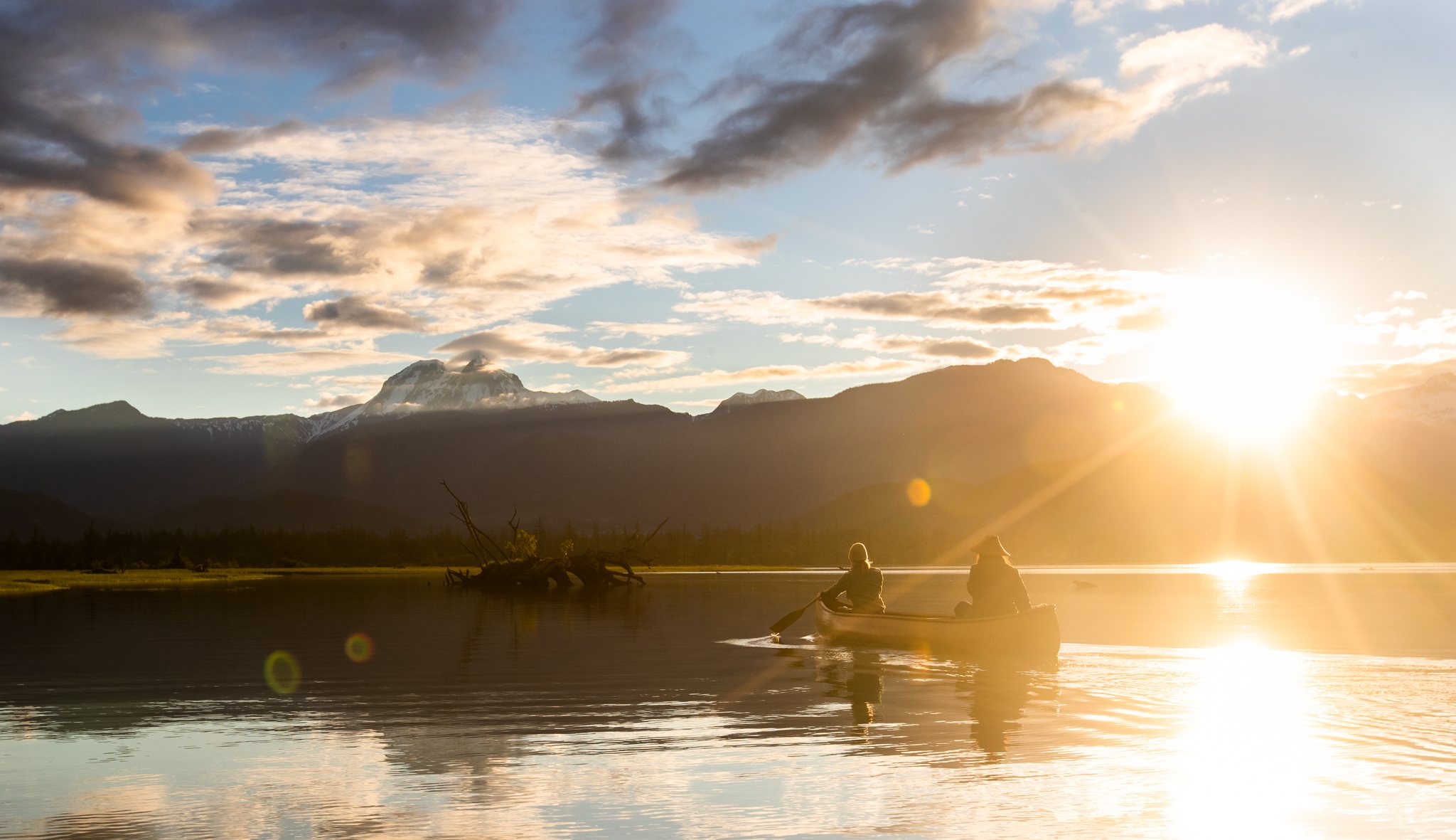
Summer: long light, glassy mornings
This is the paddler's season. Mornings are often still, and the sunrise light on the peaks is hard to beat. By afternoon, the wind commonly picks up, so launch early. Read the tide guide before you go: the estuary's channels and flats change dramatically with the tide.
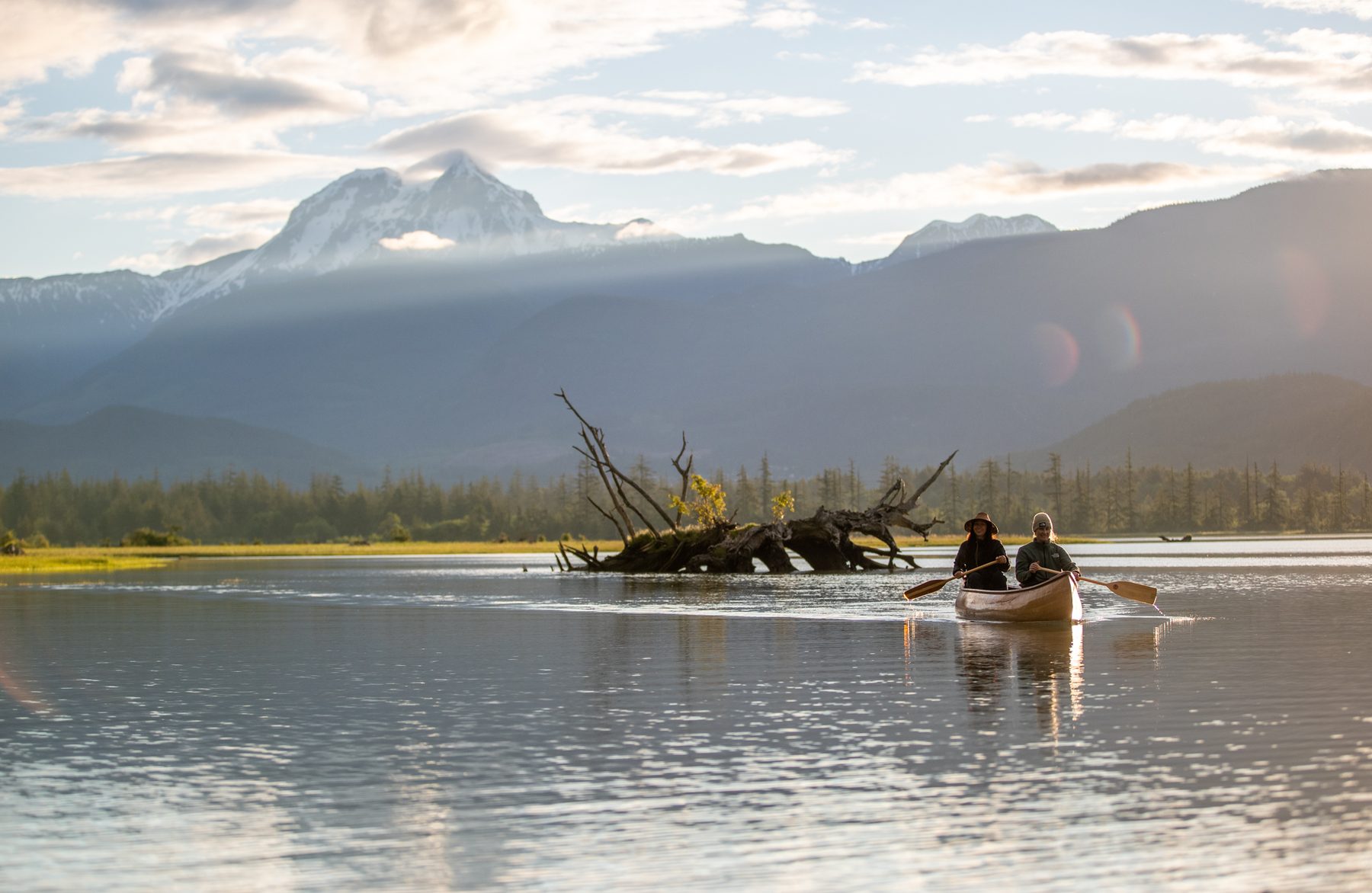
Fall: salmon, mist and moody skies
Autumn brings clearing storms, fresh snow on the peaks and the return of salmon to the rivers. Mist rolls over the flats in the mornings and light is soft and low all day. Water is getting cold, so dress for it and wear a life jacket.
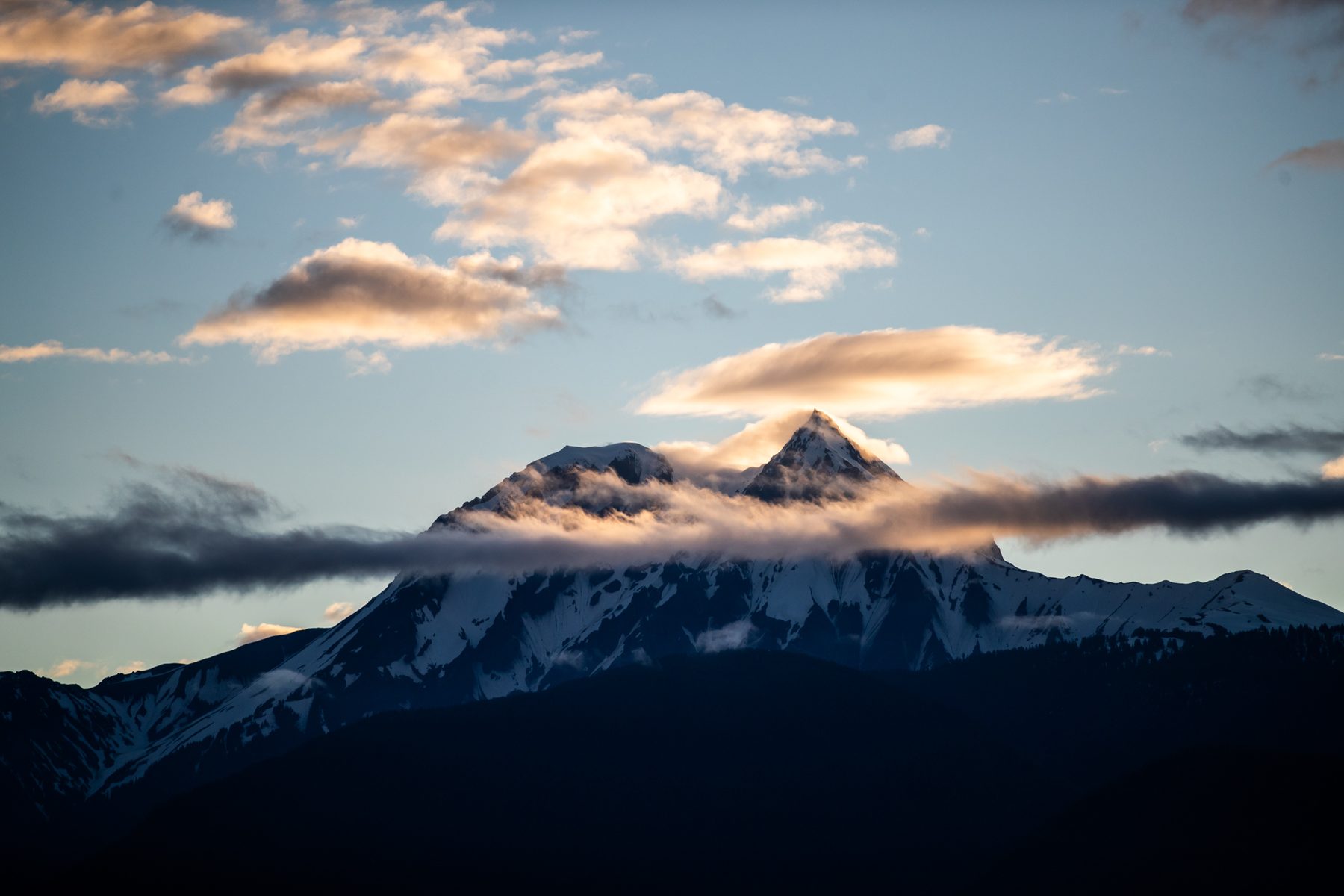
Winter: eagles and quiet
Winter is the season for bald eagles in the valley, and the estuary is a good place to look. The air is crisp, the crowds are gone and the mountains are at their whitest. See our guide to birdwatching in the estuary. Paddling is for experienced and well-equipped people only.
Photographing the estuary
- Golden hour and the 30 minutes after sunset are best.
- Get low: from a canoe, you'll be at water level, perfect for reflections.
- Add a canoe: a paddler gives scale to the big landscape.
- Use a long lens for wildlife, and keep your distance.
Respect the wildlife area
The estuary is a protected wildlife management area and it sits within Squamish Nation territory. Stay on designated routes, keep your distance from birds and nests, keep dogs under control and pack out everything you bring. For routes, see paddling the Mamquam Blind Channel.
Want to get out on the water? Squamish Canoe Rental delivers canoes and paddleboards, and has a guide to sunrise and sunset paddles.
Questions
What is the best season to visit the Squamish Estuary?
There's no bad season, only different ones. Summer is best for paddling; fall and winter are strong for wildlife; spring brings runoff, migrating birds and fresh green.
Can you canoe the Squamish Estuary in winter?
It's possible on calm days, but the water is cold and conditions change quickly. Dress for immersion, check the forecast and tides, and consider waiting for a settled window.
Where can I rent a canoe for the estuary?
Squamish Canoe Rental delivers canoes and paddleboards around Squamish. See the rental section of this site for details.